
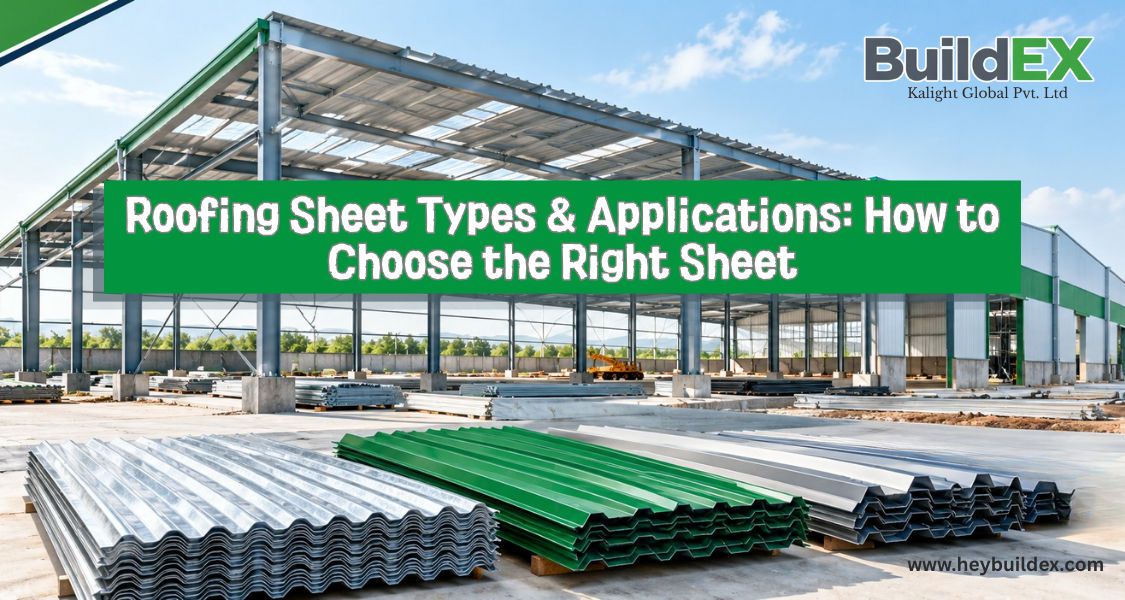
A roofing sheet that performs well on one building can disappoint on another. The difference usually comes down to building type, weather, roof design, sheet thickness, coating, corrosion exposure, expected service life and budget. Understanding roofing sheet types is the first step towards a sound decision, whether you are putting up a factory near Visakhapatnam, a warehouse around Hyderabad or a small workshop on a tight budget.
This guide explains the common options, where each is used and how to choose with confidence.
What Are Roofing Sheets?
It helps to separate two things. The roofing sheet is the weather-facing skin. The roof structure (rafters, trusses and purlins) carries the load. Purlins are horizontal members that run across the trusses and support the sheets. Their spacing strongly influences which sheet profile and thickness will work.
Roofing Sheet Types Used in India
Material and profile are separate choices. You pick a base sheet and coating, then a profile. Among the types of metal roofing sheets, these are the most common.
GI Roofing Sheets
A GI roofing sheet is made from steel coated with zinc through galvanization. The zinc layer protects the steel from rust and gives the sheet a metallic finish. GI sheets are widely used on industrial and utility structures, sheds and godowns. Corrosion resistance depends on the zinc coating level and the environment, so check the coating specification instead of assuming every GI sheet performs alike.
PPGI Roofing Sheets
A PPGI roofing sheet starts as galvanized steel and receives a paint system on top. This colour coated sheet offers a wider choice of finishes and suits buildings where appearance matters, such as showrooms, commercial complexes and visible factory facades. Maintenance depends on paint quality and exposure; scratches and cut edges should be handled properly during installation.
Corrugated Roofing Sheets
A corrugated roofing sheet has a continuous wave-like profile. The shape adds stiffness to thin steel and sheds water efficiently. Corrugated sheets are common on agricultural buildings, sheds, workshops and utility structures.
Common Roofing Sheet Applications
Roofing sheet applications vary widely. Typical uses include:
- Industrial sheds and factories: large, economical roof coverage for production areas.
- Warehouses: wide-span roofs with quick installation.
- Workshops and garages: durable cover for small to medium footprints.
- Commercial buildings: showrooms, malls and offices, often with coloured finishes.
- Agricultural structures: poultry sheds, cattle sheds and storage buildings.
- Utility buildings: pump houses, substations and equipment enclosures.
- Temporary structures: site offices and construction-phase shelters, where reuse matters.
Roofing Sheets for Industrial Sheds
When selecting a roofing sheet for industrial shed projects, consider:
- Roof span and purlin spacing: wider spacing demands a stronger sheet or deeper profile.
- Wind conditions: open or exposed sites need attention to fastening and sheet capacity.
- Coating and corrosion exposure: chemical, humid or coastal surroundings call for a higher coating specification.
- Installation method: fastener type, overlaps and roof slope affect leak resistance.
- Drainage and maintenance: check that water runs off freely and that gutters and fixings remain accessible.
Buyers in Andhra Pradesh and Telangana should also weigh local humidity, industrial exposure and transportation distance, especially for projects near the coast.
Roofing Sheets for Warehouses
A roofing sheet for warehouse use must cover large areas economically and go up quickly. A metal roofing sheet for warehouse projects is often chosen for its light weight and fast installation. Key considerations are:
- Roof area and weather exposure: large roofs collect more rain and heat, so drainage and insulation planning matter.
- Profile and thickness: these should be chosen with the span and purlin layout, and sheet lengths should limit end laps.
- Coating and maintenance: longer service expectations justify closer attention to coating.
- Structural compatibility: the sheet must suit the supporting steel frame, including its loads and fixing details.
Hubs such as Hyderabad, Vijayawada and the developing Amaravati region continue to see warehouse and logistics construction, so delivery planning for long sheets deserves early attention.
GI vs PPGI Roofing Sheets
| Feature | GI Roofing Sheet | PPGI Roofing Sheet |
|---|---|---|
| Base material | Galvanized steel | Pre-painted galvanized steel |
| Surface | Zinc-coated | Painted/coated |
| Appearance | Metallic finish | Multiple colour options |
| Typical applications | Industrial and utility structures | Industrial, commercial and architectural applications |
| Selection factors | Environment and performance requirements | Appearance, coating and environment |
| Maintenance | Depends on exposure and coating condition | Depends on coating quality and exposure |
How to Choose the Right Roofing Sheet
Use this simple framework.
1. Identify the building type. Industrial shed, warehouse, factory or commercial building. Each has different load, span and finish needs.
2. Check weather conditions. Consider rainfall, heat, wind, humidity and coastal exposure.
3. Select appropriate thickness. Base it on span, purlin spacing, loads, wind and the project design, not a generic number.
4. Check the coating. Review the galvanization level, paint system and corrosion protection against environmental exposure.
5. Check dimensions. Confirm length, width, effective cover width and thickness. Effective cover width, not overall width, decides how many sheets you need.
6. Consider installation. Plan fasteners, overlaps, roof slope and workmanship quality, since poor installation causes leaks even with good sheets.
How to Choose Roofing Sheet Thickness
A thicker sheet is not automatically right, and a thinner one is not automatically wrong. A deeper profile on closely spaced purlins can perform differently from a shallow one on wide spacing. Ask for the base steel thickness and coating details in writing so quotes can be compared fairly.
Factors Affecting Roofing Sheet Price
Roofing sheet prices change often, so any fixed figure quickly goes out of date. These factors drive the final cost:
- Steel market conditions and base steel thickness
- Coating type and level
- Profile and sheet dimensions
- Quantity ordered and brand
- Delivery location, transportation, taxes and commercial terms
Compare price together with specification, coating and delivered cost. A lower rate on a thinner or lightly coated sheet may cost more over the life of the roof.
Buying Roofing Sheets from BuildEX
BuildEX supplies roofing and steel products for construction, industrial and commercial requirements. Buyers can enquire based on the required roofing sheet type, profile, thickness, quantity and delivery location. Visit https://www.heybuildex.com/ to share your requirement and confirm specifications before ordering.
Roofing Sheet Selection Checklist
| Factor | What to Check |
|---|---|
| Building type | Industrial, warehouse, commercial, etc. |
| Sheet type | GI, PPGI, etc. |
| Thickness | Based on structural requirements |
| Coating | Required corrosion/environmental protection |
| Dimensions | Length, width and effective cover |
| Roof design | Slope and purlin spacing |
| Environment | Coastal, humid, industrial, etc. |
| Quantity | Project requirement |
| Supplier | Product specification and delivery capability |
Key Takeaways
- Roofing sheet types differ by material, coating and profile; treat these as separate decisions.
- GI and PPGI are both widely used. Pick based on environment, finish and coating specification.
- Thickness should come from the structural design, span, purlin spacing and wind loads.
- Compare quotes on specification and delivered cost, not rate alone.
Frequently Asked Questions
Which roofing sheet is best for an industrial shed?
No single sheet is best for every industrial shed. Coated steel sheets such as GI or PPGI are widely used, but the right choice depends on span, purlin spacing, wind exposure, corrosion conditions and budget. Match the profile, thickness and coating to the structural design.
What is the difference between GI and PPGI roofing sheets?
A GI sheet is galvanized steel with a zinc coating and a metallic finish. A PPGI sheet is galvanized steel with an added paint layer, which gives colour options and a finished look. Performance in either case depends on coating quality and site exposure.
How do I choose the right roofing sheet?
Start with the building type and local weather, then select the coating, profile, thickness and dimensions. Check these against the roof design and purlin spacing, and confirm installation details such as fasteners and overlaps. Finally, compare suppliers on specification and delivered cost.
What thickness of roofing sheet is suitable for an industrial shed?
There is no universal figure. Suitable thickness depends on span, purlin spacing, wind loads, profile and the roof design. Ask your structural designer or consultant to specify it, and check that the sheet supplied matches the specification, including coating.
Is PPGI roofing sheet suitable for warehouses?
Yes, PPGI roofing sheets are commonly used on warehouses, especially where a colour finish matters. Suitability still depends on coating quality, thickness, profile and the site environment. Confirm these against the project design before ordering.
What is a GI roofing sheet used for?
GI roofing sheets are used as roof covering and wall cladding on industrial sheds, warehouses, workshops, agricultural buildings and utility structures. The zinc coating gives basic corrosion protection, so the right coating level for the site conditions should be confirmed.
Which roofing sheet is better for coastal areas?
Coastal areas expose roofs to humidity and salt-laden air, so coating quality matters most. Compare coating specification and protection levels rather than sheet type alone. For locations such as Visakhapatnam, discuss exposure conditions with your supplier and designer.
How long do metal roofing sheets last?
There is no fixed lifespan. Service life depends on coating quality, base steel, climate, corrosion exposure, installation quality and maintenance. Sheets in mild conditions generally perform differently from those near coasts or chemical industries, so ask suppliers for specification details.