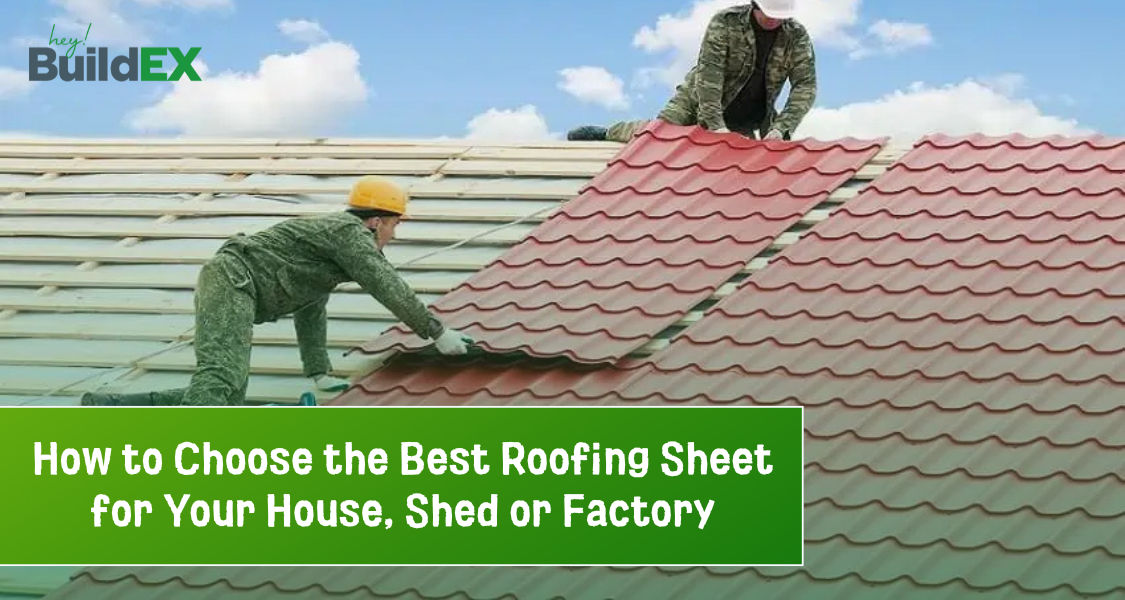
A practical guide for buyers, site engineers & project planners
Choosing the right roofing sheet is not just about price or brand — it directly affects structural safety , heat control, leakage risk, maintenance cost, and project budget.
This guide is written specifically for buyers and site engineers who need to answer practical questions like:
| Type | Best For | Why |
|---|---|---|
| GI Sheet | Temporary sheds, budget projects | Low cost, basic protection |
| Galvalume Sheet | Factories, coastal areas | High corrosion resistance |
| Color-Coated Sheet | Houses, commercial buildings | Aesthetic + corrosion protection |
| Aluminium Sheet | Coastal, chemical plants | Rust-proof, lightweight |
| Polycarbonate Sheet | Skylights, greenhouses | Light transmission |
Real example:
A poultry shed near the coast will fail quickly with GI sheets — galvalume or aluminium is the better long-term choice.
| Thickness | Suitable Projects |
|---|---|
| 0.35 mm | Temporary sheds |
| 0.40 mm | Houses, small sheds |
| 0.45 mm | Warehouses, factories |
| 0.50 mm | Heavy industrial, high wind |
| 0.60 mm | Cyclone or coastal zones |
Engineer tip: Always increase thickness when:
Roofing sheets are generally available in:
| Project Type | Recommended Length | Reason |
|---|---|---|
| House | 10 ft | Easy handling, low wastage |
| Small Shed | 10–12 ft | Fewer overlaps |
| Factory | 12–14 ft | Faster installation |
| Warehouse | 14 ft | Reduced joints, better sealing |
Formula:
Number of sheets = Roof area ÷ Effective coverage per sheet
Example:
Roof area = 1,200 sq ft
Sheet effective coverage = 25 sq ft
➡ Required sheets = 1,200 ÷ 25 = 48 sheets
| Thickness | Weight per sq ft |
|---|---|
| 0.40 mm | 3.3 kg |
| 0.45 mm | 3.7 kg |
| 0.50 mm | 4.1 kg |
Example:
1,200 sq ft roof using 0.45 mm sheets:
1,200 × 3.7 = 4,440 kg (4.44 tons)
| Parameter | House | Shed | Factory |
|---|---|---|---|
| Sheet Type | Color-coated | GI | Galvalume |
| Thickness | 0.40–0.45 mm | 0.40 mm | 0.45–0.50 mm |
| Length | 10 ft | 10–12 ft | 12–14 ft |
| Durability | Medium | Medium | High |
| Cost | Medium | Low | High |
Choosing the right roofing sheet is a balance between type, thickness, size, durability, and budget. For buyers and engineers, the focus should always be on:
A well-planned roofing decision reduces failures, saves money, and ensures peace of mind for years.